Showing posts with label Doing Business. Show all posts

Saturday, 29 September 2012

Article: Why Ads Are Imitating the Photos in Your Smartphone

명품 광고를 스마트폰으로 찍는 이유는?

By KATHERINE ROSMAN

록산 로만(20)은 광고를 싫어한다. 로만은 광고가 있을 법한 TV나 인터넷 사이트를 피한다. 하지만 최근 그녀는 패션브랜드 마이클 코어스의 페이스북 광고에 있는 ‘좋아요’ 버튼을 클릭했다. 스웨터를 입은 여자모델이 보트에 타고 있는 사진이었다.

“상업적인 느낌이 들지 않고 스마트폰으로 찍은 사진같아서 거부감이 적었다.”

잡지 광고나 TV 광고를 보는 시간이 줄어듬에 따라 라이프스타일 광고는 일반인이 스마트폰으로 찍어서 페이스북 등 소셜미디어에서 공유하는 사진과 같은 느낌을 추구하게 됐다. 소비자가 가장 매력적으로 여기는 이미지이기 때문이다.

코치와 버버리, 티파니 등 브랜드는 스트리트패션 전문 사진가가 제작한 디지털 광고 캠페인을 페이스북과 유튜브 등에서 공유하고 있다.

온라인 의상 대여업체 렌트더런웨이는 홈페이지에 전문모델 사진 대신 일반인이 상품을 입고 찍은 사진을 홈페이지에 올린다.
패션브랜드 레베카 민코프는 지난해 사진공유 사이트 인스타그램에 올라온 사진으로 만든 인쇄광고를 잡지에 실었다. 신발을 주제로 한 민코프캠페인은 디자이너가 신고 있는 신발을 직접 촬영해서 올린 인스타그램 사진으로 시작된다. 캠페인 개시 이래 신발매출이 급등했다고 공동창업자 유리 민코프는 전한다. 기존의 고급스런 사진광고도 계속하고 있다. “우리 고객이 일상과 환상 둘다를 추구하기 때문이다.”

지난 3월 도리토로코 타코를 출시한 타코벨은 소비자들이 도리토로코를 먹는 사진을 인스타그램에 많이 올렸다는 사실을 눈여겨 보고 인스타그램에 연락해 회사명과 로고, 앱디자인을 TV광고에 써도 된다는 허락을 받았다.

“인스타그램의 외관과 느낌을 우리 TV광고에서 그대로 구현했다”고 브라이언 니콜 최고마케팅관리자(CMO)는 말한다. 얌브랜드 계열사인 타코벨은 지금까지 2억 개 이상의 도리토로코를 판매했다.

소셜미디어같은 느낌을 주는 캠페인에는 기존의 럭셔리한 광고캠페인 못지 않은 비용이 소요된다.

인위적으로 보이지 않는 아름다움을 만들어내는 것이 관건이다. 소비자들이 ‘좋아요’ 버튼을 누르고 친구와 공유하려고 하는 광고를 제작하면, 그 다음에는 추가비용을 들이지 않아도 광고가 소셜미디어에서 저절로 확산되기 때문이다.

업체가 매력적이라고 판단한 사진과 제품을 포스트하는 전자상거래사이트 더팬시닷컴의 조 아인혼 사장은 “현실적인 느낌이 드는 사진이 온라인에서 인기가 가장 높다”고 말한다. 더팬시닷컴 이용자들은 취향과 미적 관점이 마음에 드는 다른 이용자를 팔로우하고 마음에 드는 아이템에 호감을 표시하며 해당 아이템이 판매 중이라면 구입하기도 한다.

아인혼 사장은 마케팅용 전문 사진보다 일반인이 찍은 사진이 더 높은 호응을 받는 예로 메니큐어 사진의 예를 들었다.

뉴욕 바니백화점은 데보라립맨의 18달러짜리 매니큐어(18달러)에 대한 전문 광고사진을 3만 명이 팔로우하고 있는 더팬시닷컴 계정에 올렸다.

한편 패션업체 앨리스올리비아의 창업자 스테이시 반뎃 사장은 동일한 브랜드 매니큐어 사진을 직원들의 아이폰으로 찍어서 업로드했다.
앨리스올리비아의 팔로워수가 9,000명이나 더 적었음에도 이 메니큐어사진에 호감을 표시한 이용자 수는 뉴욕 바니백화점 사진이 기록한 1,400명보다 훨씬 많은 약 9,000명이었다.

“우리 고객은 시도 때도 없이 마케팅 대상이 되기를 원하지 않는다. 인위적인 것이 아니라 진실한 데 감명받는다”고 반뎃 사장은 설명했다.

뉴욕 바니백화점은 이에 대해 논평을 하지 않았다. 2011년 출범한 더팬시닷컴의 1일 매출은 2만 달러이고, 회원 수는 약 200만 명, 이용자가 아이템에 호감을 표시하는 횟수는 1일 50만 회라고 한다.

아인혼 사장은 전문 사진가가 촬영한 것처럼 보이는 사진보다 자연스러운 느낌이 드는 사진이 더 호응을 받는 사례가 흔하다고 전한다. 이용자가 호감을 표시하는 횟수가 실제 매출과 상관관계가 있다고 밝힌 그는 앞에서 언급한 메니큐어의 매출실적 공개를 거절했다.

코치는 빈티지풍 핸드백 라인을 홍보하는 온라인 캠페인을 위해 스트리트패션 사진촬영 선구자며 관련 블로그(Sartorialist)를 출범한 스캇 슈먼을 고용했다. 슈먼은 패션모델이 아닌 일반인에게 자신이 고른 옷을 입힌 후 전문 메이크업이나 코디, 조명 없이 촬영한다.

“이러한 방식의 촬영은 현실성을 높인다”고 슈먼은 말한다. 그는 “앙상한 10대 모델이 한껏 단장하고 촬영한 사진은 현실성이 없기 때문에 소비자와 브랜드 사이에 장벽을 만들 뿐이”이라고 설명했다.

버버리와 티파니 등 유명 브랜드는 스트리트패션 캠페인을 진행하기 위해 슈먼을 고용했다.

코치 대변인은 슈먼과 협력하는 데 드는 비용이 전문 모델을 고용하는 것과 비슷하게 든다고 전한다. 소셜미디어를 위해 스트리트패션 캠페인을 제작했으며 전통적인 방식으로 촬영된 사진으로 잡지광고도 진행할 예정이라고 한다.

2009년부터 유튜브에 메이크업 시연동영상을 올리기 시작한 랑콤은 처음에는 전문모델과 메이크업 아티스트, 몸값이 비싼 제작팀을 동원해 동영상을 제작했다. 첫 동영상은 조회수 약 1만5,000건을 기록하며 실망스러운 성과를 거두었다.

그후 랑콤은 유튜브에서 많은 팔로워를 거느리고 있는 메이크업 아티스트 미셀 판과 계약을 맺었다. 미셀 판은 이미 사용한 브러시에 파운데이션을 바르는 등 일반인이 만든 것과 같은 느낌을 주는 동영상에서 클럽용 메이크업을 어떻게 할 것인지 설명했다.

랑콤 임원진은 동영상을 처음 보았을 때 ‘충격’을 받았지만 그래도 영상을 유튜브에 올렸다. 이 동영상은 며칠 만에 조회 수는 100만 건에 육박했다.

직원들이 스마트폰으로 찍은 사진을 페이스북에 올리고 있는 랑콤은 뉴욕 패션위크 기간에도 전문 사진가 대신 직원들이 촬영한 사진을 온라인에 올렸다.

스테이시 매클러 랑콤 대변인은 “온라인에서 반향을 일으키는 사진은 전문가가 아니라 직원이 찍은 사진”이라고 말했다.

지난 여름 구글은 다큐멘터리 감독 데이비드 겔브를 고용해 초고속인터넷서비스 구글파이버 TV광고를 제작했다. 겔브 감독은 켄자스시티 주민들을 인터뷰하며 인터넷 속도가 개선된다면 인생이 어떻게 바뀔 것인지에 대해 질문했다. 구글 측이 스마트폰으로 촬영한 사진을 많이 넣어달라고 요청했을 때 겔브 감독은 회의적인 반응을 보였지만 스마트폰 촬영분을 검토한 후 동의하게 되었다. 겔브 감독은 말한다.

“사용자가 생성한 콘텐츠의 느낌과 이미지는 사람들에게 익숙한 시각언어를 사용하며 매우 친밀한 느낌을 준다.”

Source: http://realtime.wsj.com/korea/2012/09/29/%eb%aa%85%ed%92%88-%ea%b4%91%ea%b3%a0%eb%a5%bc-%ec%8a%a4%eb%a7%88%ed%8a%b8%ed%8f%b0%ec%9c%bc%eb%a1%9c-%ec%b0%8d%eb%8a%94-%ec%9d%b4%ec%9c%a0%eb%8a%94/

English: http://online.wsj.com/article/SB10000872396390443916104578020302707039068.html?mod=WSJASIA_hps_MIDDLEThirdNews#articleTabs%3Darticle

Monday, 3 September 2012

Dragon's Den

Dragons' Den is a series of reality television programmes featuring entrepreneurs pitching their business ideas in order to secure investment finance from a panel of venture capitalists. The show originated in Japan as "Manē no Tora" (Tiger of Money, a pun on "Tiger of Malaya", the nickname of a famous WWII general, Tomoyuki Yamashita). The format is owned by Sony Pictures Television International.


BBC 2: http://www.bbc.co.uk/programmes/b006vq92

Friday, 24 August 2012

Recent Retail Market Trends

Trends, which are relevant to the M&S project

1. Cash-less: People use non-cash payment devices including credit card and PayPal
2.  Info-lust (Point-know-buy / Right here, right now): People desire for new information on products and want to product immediately
3.  Human brands: Business is influenced by customers and their lifestyle is reflected on product development
4. Statusphere – Status stories: All about online status, e.g. ‘Like’ in Facebook, ‘follower’ in Twitter
5. Discover and decide (F-Factor): two main moments in every purchase – discover a product or service, and decide to buy or use (fans, followers, friends’ comments are influential)
6. Customise (MIY): Make-It-Yourself and express yourself
7. Own-less: Sharing, renting and giving
8. Recommerce: Customers re-sell purchased products
9. Reward: Collecting points and receiving gifts from brands

Friday, 17 August 2012

Story Telling

I like creating a story for a product or a brand. And, the current market trend is story telling.  
Rather than identifying a customer journey for service, I like to create a story board...

This is what we did during the class. Needs to be improved.


Wednesday, 18 July 2012

Project Management Methodologies: How Do They Compare?

Agile Methodology

Though Agile was first utilized in IT projects, the bottom line on Agile methodology according to a simplified method I wrote is, “using the best process through empowered teams, customer involvement, and the ability to analyze and quickly control changes to the project scope at inception and throughout the lifecycle of the project.”

Whew, what does that even mean? Basically, using Agile management in a project helps you define the project clearly with stakeholders and team input, sprints or iterations assigned to a small groups, effective project monitoring, immediate change instead of constant review, along with constant communication throughout the project. Essentially, in my article Agile for Dummies: Making Sense of It All, a process at a auto service center that took 12 steps to complete was re-evaluated using Agile, cutting the process down to only 4 steps. Simply put, Agile cuts project bottlenecks.

PRINCE2®

According to the official PRINCE2 website, this management methodology developed in the UK includes six variables, “costs, timescales, quality, scope, risk, and benefits.” The article PRINCE2 Project Management Methodology goes a step further in identifying the method; “PRINCE2 is an acronym for PRojects IN Ccontrolled Environments.” It could be argued that this method combines all practices offered through PMBOK including a consistent approach, focus on business justification, control through review, stakeholder involvement from beginning to end, and continuous improvement.
PRINCE2 roles are very specific in design including the project management, users, customers, and suppliers. With PRINCE2, however, teams report to the project manager who in turn, before risks, problems, or changes occur is required to report to a compilation of users, customers, and suppliers for effective decision-making outcomes.

Six Sigma / Lean Six Sigma Methodologies

Perhaps Agile management developed through Six Sigma and Lean Six Sigma and those who believe so adamantly in the Agile method will tell you they are never going back. In the article Key Concepts of Six Sigma, the process is defined as a “statistical concept that measures a process in terms of defects. Achieving Six Sigma means your processes are delivering only 3.4 defects per million opportunities or DMPO.” Six Sigma started with two phases, the DMAIC phase and the DMADV phase. The DMAIC phase or defining, measuring, analyzing, improving, and controlling are first used to keep projects within specification guidelines. Next comes the DMADV phase or defining, measuring, analyzing, designing, and verifying. In this phase project elements have completed the DMAIC phase and are perfected.
With Lean Six Sigma, the process is shorter by combining the two phases to realize results quicker. While quick doesn’t mean getting to the project deadline faster, it does mean by utilizing Lean Six Sigma, your processes within your phases are streamlined for quality.

Is there a "best" project management methodology? Read on to the next page for a discussion of this question.

If we look at every project management methodology is one better than another? Can you use any project management methodology on any project or must you choose the correct methodology? How to choose the right project management methodology for your project.

Tuesday, 17 July 2012

Coloured food

Food Colour Curation is the newest trend to be focused.
Red means usually to stop or to warn. Green is eco-friendly or safe.
What about food? Pink is strawberry, yellow is banana and green is mint flavour?
What happens if you bite a pink jelly bean and it taste like peppermint? Are you going to sue the manufacturer, or is it something funny? Think outside the box for a moment when you try a new type of food.
Nowadays, you can have neo blue apples and shiny silver bananas!

Esslack food spray

Is black water healthier than non-coloured water?
blk
 

Bally Heritage

I like brands with history.
Bally is a Swiss fashion brand which has a heritage of  shoe making.


APPLE Recuit Videos

The new recruit video from APPLE on YouTube

Be a part of something meaningful!

(Recruitment for retail stores)
APPLE says: We listen!

I like brands or companies with the true culture and belief. Is APPLE one of them?

Wednesday, 11 July 2012

M&S project supporting materials


CITY A.M
Wednesday 11 July 2012


 London Evening Standard
Tuesday 10 July 2012 


The reason for change of management (the situation):
- Non-food sales down 6.8 per cent
- Unattractive fashion offers (strategy) and unfortunate weather situation
- Food business grew 0.6 per cent

More reading:

Monday, 2 July 2012

DRYLAND

A new breed of modern office space in Kensington, London's premium business members' club.

Dryland Business Members' Club is a new style and quality of serviced office with the atmosphere of a private members club, coupled with the service standards of a five star hotel.

Modern Office Space at London's most Luxurious Business Members' Club
One word shapes the form and function of serviced offices at Dryland Business Members' Club - service. We provide a human face to your business and therefore we hope Dryland’s high levels of service will give the right impression to you, your clients and your associates. Dryland's price is all inclusive of utilities, rates, service charges and a range of services and benefits. Take a look at Member, Pod and First service offices to see what's included

More info: http://www.dryland.com/

Seoul Design

Long overshadowed by its neighbours, Seoul's creative community is flourishing as a new generation of designers, artists and entrepreneurs develop projects from product design to theatre spaces. Monocle's Gabriel Leigh travelled to the South Korean capital to meet some of the people leading the charge.


More info: http://www.monocle.com/sections/design/Web-Articles/Seoul-Design/

Friday, 8 June 2012

Crowd funding platform

Local economy is controlled by giant conglomorates. How can we rescue local SMEs?
Is crowdfunding a perfect solution? Have you heard about 'locavasting' (local + investing)?
Local investment is more than just exchanging money...

Look at some of crowd funding webistes.

http://vimeo.com/33226941
http://www.kickstarter.com/
http://www.quirky.com/
http://www.startupaddict.com/
http://www.seedrs.com/

And the next stage for crowd funding
https://flattr.com/

http://appsplit.com/


Incubation instead of inestigation...
(I need to read this page: http://trendinsight.biz/archives/72427)

Luxury hotel furniture sourced and made available to tourists

Discover & Deliver hunts down the accessories adorning rooms in some of the world’s most luxury hotels and delivers them to customers’ doors.

We recently saw PleaseBringMe.com offer a way for tourists to contribute to the community they are visiting by delivering products from abroad as they travel. Now travellers can take something back from their experience with Discover & Deliver, a site which hunts down the sources of accessories adorning rooms in some of the world’s luxury hotels and delivers them to customers’ doors.

Based in the UK, the site was conceived by founder Isabel Rutland after a stay in the Greenwich in New York, which is famous for its perfectionist interior design. Rutland decided she wanted to make it easier for people to replicate the high standard of hotel decoration in their own homes and set up Discover & Deliver to fulfil those needs. Tourists who have spotted a piece of furniture, crockery or cutlery they like while staying in a hotel can take a photo of the object and send it into the site, whose team of researchers aim to find the exact object, or failing that something very similar in terms of style and quality. This service costs GBP 25, which is reimbursable upon purchase. Each item can be bought through Design & Discover, which offers free international delivery of the objects to UK, Europe and US. Travelers who have purchased something too sizeable to take home can also benefit from the delivery service, although a fee is then charged. The site features a webshop which contains some of the interior design team’s favorite spottings from hotels worldwide, photographed both on their own and in their original location, which acts as a recommendation bank for those who want to add luxury to their home but don’t know where to start.

Discover & Deliver turns some of the most admired hotels in the world into interior design showrooms, with the added benefit that tourists can try before they buy. Could this concept work in your industry?

More info: http://www.springwise.com/tourism_travel/luxury-hotel-furniture-sourced-tourists/

3D Food Printer: the next business

This 3D printer makes edible food - CNN Money

NEW YORK (CNNMoney) -- A 3D food printer sounds like something out of Star Trek, but it's not out of this world. It's up and running at the French Culinary Institute in Manhattan -- and in five years, it could be in your home.

As part of a project at Cornell University, a group of scientists and students built a 3D printer and began testing it out with food. The device attaches to a computer, which works as the "brain" behind the technology.

It doesn't look like a traditional printer; it's more like an industrial fabrication machine. Users load up the printer's syringes with raw food -- anything with a liquid consistency, like soft chocolate, will work. The ingredient-filled syringes will then "print" icing on a cupcake. Or it'll print something more novel (i.e., terrifying) -- like domes of turkey on a cutting board.

"You hand [the computer] three bits of info: a shape that you want, a description of how that shape can be made, and a description of how that material that you want to print with works," says Jeff Lipton, a Cornell grad student working on the project. Lipton is pursuing a Ph.D. in mechanical engineering.

The project came out of Cornell's Fab@Home venture, headed up by associate professor Hod Lipson. Started in 2005, the project aims to create do-it-yourself versions of machines that can manufacture custom objects on-demand. The group started experimenting with food fabrication in 2007.

Lipton thinks food printing will be "the killer app" of 3D printing. Just like video games fueled demand for personal computers 30 years ago, he thinks the lure of feeding Grandma's cookie recipe into a printer will help personal fabricators expand beyond the geek crowd.

"It's really going to be the next phase of the digital revolution," he says.


David Arnold, director of culinary technology at the French Culinary Institute, has been testing out the technology since October 2009. He loves the experimentation it makes possible.

"One of the main things I hope this machine will let us do is create new textures that we couldn't get otherwise," he says. "This is the first time I've really seen this happen."

That could draw in chefs and restaurateurs. But Arnold also thinks a 3D food printer will have mass appeal.
"This would be a slam dunk for cookies at holiday time," he says. "Anything that requires a high level of precision that people don't usually have with their hands, in terms of making icing or decorations, this thing can perform amazingly well."

Because it's an academic project, the 3D food printer isn't commercially available -- yet. The Fab@Home project has the blueprints for free online, and dedicated hobbyists can use them to build their own. One retailer, nextfabstore.com, offers an assembled version for sale -- starting at a mere $3,300.

Entrepreneur Jamil Yosefzai plans to be on the forefront of commercializing the technology. His New York City-based startup, Essential Dynamics, is working on a version that can be sold to the first wave potential customers: pastry chefs and tech early adopters.

Yosefzai thinks his version of the printer will kinetically retail for around $1,000, but he expects that price tag to eventually fall to $700 or so. And he predicts that the technology could become a household staple within a decade.

"It comes down to comfort level, and that will expand as the [technology] goes more and more into schools and everywhere else," he says. "Sort of like computers -- the kids picked it up first, then the parents picked it up, and once everybody has an acclimation to it, they'll be printing left and right."

Source: http://money.cnn.com/2011/01/24/technology/3D_food_printer/index.htm

Speculations On 3D Printing


Yesterday I speculated about the potential of 3D printers as future consumer products, as well as its possible societal and economic consequences. in the world of food we can find the same developments. Think of the interesting project of the researchers and futurists at Philips to explore the future possibilities of a Food Printer. The Food Printer is the result of an experimental investigation which is a part of Philips’ Diagnostic Kitchen program. It’s an effort to take a provocative and unconventional look at areas that could have a profound effect on the way we eat and source our food 15-20 years from now.


“The Food Printer has been inspired by the so-called ‘molecular gastronomists.’ These chefs deconstruct food and then reassemble it in completely different ways, so for instance you could be served carrot as foam or parmesan cheese as a strand of spaghetti. “We wanted to examine how you could take this idea further in the domestic environment” says van Heerden. This led to the concept of a Food printer, which would essentially accept various edible ingredients and then combine and ‘print’ them in the desired shape and consistency, in much the same way as stereolithographic printers create 3-D representations of product concepts. The nutritional value and relevance of what was being ‘printed’ could also be adjusted based on input from the diagnostic kitchen’s nutrition monitor.”

Monday, 28 May 2012

Brand Flagship Store - Seoul

Brand Flagship Store in Seoul

Maison Hermes Dosan Park
This is one of the first brand store building in Dosan Park area. I love their small museum, gallery and cafe in the bulding. You don't have to buy anything, but you can still explore and enjoy the Hermes! If you are lucky, you will be able to watch the Hermes street concert with hip musicians in front of the building. Love it!


Ann Demeulemeester
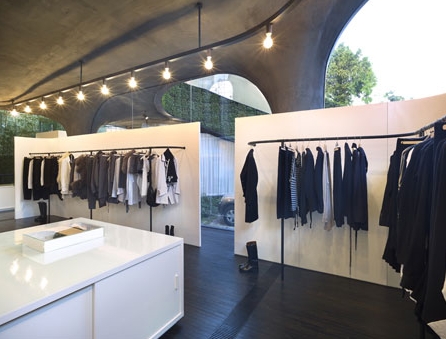
The green grass building in the middle of Seoul is Ann Demeulemeester's flagship store. The first floor is her store, and the basement and the sencond floors are used by Hansom, Korean Fashion Company. This naturalism green and curvy building is an oasis between concrete blocks of the city.


Paul Smith
The newest building in Dosan Park area is the Paul Smith. The architecture understood the brand and designer, and reflected Sir Paul Smith's belief to the building.


Images from: 
http://www.dezeen.com/

StreetMuseum iPhone app

Source: Muesum of London
http://www.museumoflondon.org.uk/Resources/app/you-are-here-app/home.html


The Museum of London has launched an iPhone app which cleverly brings its extensive art and photographic collections to the streets of the capital...

The free app, called StreetMuseum, has been developed with creative agency Brothers and Sisters and makes use of geo tagging and Google Maps to guide users to various sites in London where, via the iPhone screen, various historical images of the city appear - just like in the image above.

More info: http://www.creativereview.co.uk/cr-blog/2010/may/streetmuseum-app

Thursday, 17 May 2012

Article: Why Successful Branding Still Happens Offline


By Ed Keller and Brad Fay

Agence France-Presse/Getty Images
Does Facebook offer better branding opportunities than word-of-mouth and human interaction?

The Facebook IPO has both the financial and marketing communities abuzz, and with good reason. Facebook is the king of the social media hill, and its growth and ability to attract a loyal and highly networked audience is to be admired.

For brands, however, online social networks are far from the Holy Grail of marketing.  The research is increasingly clear and compelling that for brands that want to be social and generate conversation, a far bigger and more powerful force is real world, face-to-face conversation.

It has been said that online social media is “word of mouth on steroids.” Key to that argument is a belief that online conversations will spread to hundreds or thousands of people (and maybe more) with the click of a mouse. But while that is theoretically possible, it is not the way online sharing usually works. Most links that are shared reach only 5-10 people. And the huge legions of Facebook fans, it turns out, are not so actively engaged with the brands they once “liked.” Fewer than 1% of brand fans on Facebook have any type of active involvement, bringing those huge numbers back down to earth.

Meanwhile, our research finds that 90% of word-of-mouth conversations about brands take place offline, primarily face-to-face, in people’s homes and offices, in restaurants and stores, really anywhere people congregate. These conversations bring with them greater credibility, a greater desire to share with others, and a great likelihood to purchase the products being discussed than conversations that take place online.

So if not via Facebook and other social networking sites, what can brands do to get conversations started? It is important to fight the urge to start your marketing strategy with a particular tool or approach. Instead, start a story that consumers will want to talk about. What are the messages about your brand and category that make you talkworthy?

Next, it’s important to tap the right talkers. Who are the consumer influencers in your category, and your brand advocates? When and where do they talk, about what, and why? Often the people who have credibility when they talk are not the target customer. And the places to reach these influencers will not flow naturally from your media optimization plan unless you’re clearly focused on word of mouth as a primary goal. Media with the largest concentrations of influencers will surprise you.

Once you have your message and target in mind, only then does it make sense to choose the channels through which to reach people and to encourage sharing. And it turns out, the biggest and most productive channel to spark conversation is not online social media, but paid advertising. Fully one-quarter of conversations about brands include an explicit reference to ads. In fact, television advertising is far and away the single biggest driver of consumer conversation. Far from being a dinosaur, as some pundits say, television and other traditional media play a key role in today’s social marketplace.
Today’s consumer marketplace is highly social, but not because of particular platforms or technologies. The businesses that will be the most successful in the future are the ones that embrace a model that puts people– rather than technology – at the center of products, campaigns and market strategies. Those who achieve the greatest success will recognize that there are many ways to tap the power of today’s social consumer.

The great social wave is an opportunity that no business can afford to ignore or look at myopically. It’s happening all around us – and to the continuing surprise of many, it’s mostly happening face-to-face.

Ed Keller and Brad Fay are co-authors of The Face-to-Face Book: Why Real Relationships Rule in a Digital Marketplace, to be published in May by Free Press. They are also principals of the Keller Fay Group, a market research and consulting firm.

Read more: http://blogs.wsj.com/speakeasy/2012/05/14/why-most-successful-branding-and-sales-talk-happens-offline/

Thursday, 10 May 2012

Article: Comforting the Wealthy

THE WALL STREET JOURNAL

April 20, 2012

Comforting the Wealthy

I like to wander around Stinky Bklyn, the Cobble Hill cheese shop, just to marvel at all the gourmet treats I can't afford: $80 bottles of olive oil, organic white truffle honey, Intelligentsia coffee. But recently, as I passed the cash register, my gastronomic reverie ground to a halt. There, alongside the $8 Mast Brothers Almonds & Sea Salt bars and Nunu chocolates, was a big, honking carton of Snickers bars.

And it's not like these were some high-concept, grass-fed Snickers varietal with chipotle peppers and figs: They were the regular, mass-produced chocolate-peanut-caramel bars you can buy at any bodega for 99 cents. Only at Stinky, they cost $1.50.

Enlarge Image CloseTim Robinson .I puzzled over this for days. As is the case with so many stores populating the Bermuda Triangle of self-conscious consumption stretching from Williamsburg to TriBeCa to Park Slope, the selection at Stinky is so carefully edited and curated that you know nothing gets in there by accident.

So was Stinky saying its customers lead such rarified lives that a Snickers bar is now considered a discovery item? Or perhaps Stinky knows something about the candy that I, a former Snickers-bar-a-day addict (they are delicious), had overlooked. Or maybe (and this explanation seemed most likely) Stinky was suggesting that its taste-making power is strong enough to transform a pedestrian Snickers bar into a whimsical find—the way Duchamp turned a urinal into high art.

You see this sort of thing in stores all over Brooklyn and downtown Manhattan. High-end street-wear shops throw in a carefully edited selection of Converse sneakers. A toy store specializing in heritage puzzles hand-carved by quadriplegic Aborigines also offers "Operation" because, you know, it's a really weird, fun game and we deserve our guilty pleasures. And then there are the brands found at every Wal-Mart that the indy-store community claims for itself: Moleskine notebooks, Stanley thermoses, Aranciata soda. But of course at the indy shop, the prices are, well, higher-end.

I went back to Stinky last week to snag one of these specially anointed Snickers bars, and wouldn't you know, they were sold out. Now Stinky was peddling Whoppers and Junior Mints, and this was even more perplexing. Whoppers don't even taste good! Still, I swear, when I bought two packs of each, the bearded cashier dispensed a subtle nod of approval. Yeah, that's me, the newest member of the Kool Kandy Klub.

Later, at the diner, I presented my find to a pal without revealing the candy's lofty origins. No, she didn't think there was anything special about them. She popped a Junior Mint and chewed. Her evaluation: "They're a little hard and stale."

Still, this friend is a financial planner. What do money types know about meta-candy? Probably she just didn't get it. I presented a second box to my little brother. I wouldn't call him a hipster, but he does plays keys in an electronica band. Alas, he also declined to admire my find: "I don't think Junior Mints are cool, not even in an ironic way."

Erin Amey, the head buyer at Stinky, stood her ground. The store's "ethos," she said, is to carry a mix of high-end specialty items along with affordable products like Schaefer beer and, yes, Snickers. "Even though they're totally commercial," she said, "they're still wonderful and delicious things!"

Junior Mints and Whoppers, she added, are "old school" candies that can be hard to find, "So it's refreshing to see them." I didn't tell her I found the same candy on sale at the Rite Aid across the street.

Sometimes shops use mainstream products as a sort of prop. Take Owl & Thistle General Store. The charming Crown Heights shop specializes in "local, green, fair and direct-trade products," like 100% certified organic cotton tea towels. So what's with the selection of sewing supplies produced by some of the biggest global manufacturers in the notions biz?

Alas, there's no local, artisanal vendor option when it comes to needles and seam rippers, says owner Keri Cavanaugh, who has a master's in curation and actually worked at a museum in her former life. But what's a general store without sewing supplies? The notions selection might be mass-produced, but it's useful, and adds to the old-timey aesthetic that's so hot right now. And wouldn't you know it, the $3.50 spools of Coats & Clark thread (that's twice what you'd pay at the Jo-Ann Fabrics chain) are a strong seller.

As is the selection of children's books (perennial favorites like "Curious George," "Madeline" and "The Giving Tree") at Burlap, the intriguing Cobble Hill clothing and gift shop. Locals snap up the $20 titles along with the store's $1,900 python bags, Stella McCartney dresses and $500 cashmere throws.

The mix always struck me as a bit of random eccentricity. But owner Temah Mollison says it's all part of her guiding philosophy in stocking the store: "To have quality goods at different price points."

It sounds like bland marketing speak, and on one level, this is a pretty basic retailing tactic. A few captivating but low-price items give riff-raff like me a reason to stop in and peek—and perhaps get seduced by a $5,000 ring.

But I think there's something else at work here: For your typical self-conscious but wealthy New Yorker with egalitarian ideals, it's hard to imagine anything more uncomfortable than patronizing a store meant just for rich people. We want our high-end stuff, but we don't want to look elitist. The children's books (and Snickers bars and Converse sneakers) offer gentle reassurance: You are not a jerk.

No, you are sucker, who pays twice the Amazon.com price for stuff made in giant factories. But it's worth it, to have all these cute stores in the neighborhood run by shopkeepers who understand. Even if the mints are stale.

—Ms. Kadet, who writes the "Tough Customer" column for SmartMoney magazine, can be reached at anne.kadet@dowjones.com

A version of this article appeared April 21, 2012, on page A18 in some U.S. editions of The Wall Street Journal, with the headline: Comforting the Wealthy.

Read more: http://online.wsj.com/article/SB10001424052702303425504577355930286332506.html

Wednesday, 2 May 2012

Article: Is marketing dead? Saatchi’s CEO thinks so.

Kevin Roberts is the CEO of Saatchi & Saatchi Worldwide and he thinks marketing is dead. He also thinks big ideas, management and strategy are pushing up the daisies. We know this because he told the Institute of Directors Convention at the 02 yesterday.

This would be an interesting position for any business leader, but coming from the big cheese at one of the world’s best known marketing and advertising agencies, it’s a right old jaw-dropper. Could this master marketeer really believe the whole shebang is over and we should all sleeve our iPads and get off home? Possibly – but probably not.


Here’s what he said:

“Strategy is dead. Who really knows what is going to happen anymore in this super VUCA (volatility, uncertainty, complexity and ambiguity) world? The more time and money you spend devising strategies the more time you are giving you rivals to start eating your lunch.
“Management is dead. To win today you need a culture and an environment where the unreasonable power of creativity thrives. Ideas are today’s currency not strategy. Martin Luther King did not say ‘I have a vision statement’ did he? He had a dream. You have to make sure you have dreams and your brand also needs a dream.”

Phew! That’s a mighty big drum Kev’s banging there. Leaving aside the crass insensitivity in comparing the U.S. civil rights movement with corporate advertising, he seems to be tangled up in contradiction. To hear an executive at the very top of a company’s management tree decrying the archaic, stick-in-the-mud nature of modern management causes more furrowed brows than inspired delegates (unless it is followed by his resignation, which it wasn’t.)

His point about strategy also has a hollow ring. ‘Strategy’ is merely a fancy word for a plan. And if Mr. Roberts is really proposing businesses should abandon planning in favour of some kind of creative anarchy, a trading playpen where hierarchy and forethought are replaced with a riot of free thinking, the outlook for Saatchi & Saatchi will be uncertain to say the least.

I’m pretty sure I’m no stuffed suit, wedded to the status quo and resistant to radical change, but I do know that any successful campaign requires careful planning and, more importantly, clients know it too.

Perhaps the most extraordinary phrase in the quote above is the flippant question ‘Who really knows what is going to happen anymore in this super VUCA world?’ Well, I hate to ask, Kevin, but aren’t you supposed to? Unless I’ve got this all wrong, clients sign up with your agency because they believe you have insights and abilities which will benefit their marketing needs. If you don’t have a clue where we’re going, who does? And there’s that tricky contradiction problem again. If you are such an innocent abroad, bobbing about on a sea of uncertainty, how can you be so sure marketing and strategy are dead?

Roberts continued:

“Business leaders need to become creative leaders. Who wants to be a Chief Executive Officer? It sounds like you work for the government and who would want that? Being a Chief Excitement Officer would be better. The big idea is dead. There are no more big ideas.
There is nothing new anymore. If marketers are just hearing about something going on then it is already old in today’s world. The further up in a company you go, the stupider you become and the further away from new things.”

Kevin Roberts had obviously hit his stride at this point, having gone from banging a big drum to running riot amongst the entire percussion section. Who wants to be a CEO? Well I don’t particularly, but Kevin clearly does. You know, what with him being one and all. What’s more, I never, ever, want to work for a firm with a Chief Excitement Officer. Good grief, this is Saatchi & Saatchi, not Wernham Hogg.
For someone who believes there are no ‘big ideas’ any more, many of these assertions sound awfully like ‘big ideas’. ‘Marketing is dead’ – big idea, right there.

Then the massive contradictions kick back in. “The further up a company you go … the further away from new things (you are).” Fortunately, that’s not really a problem because – as Kevin has just told us – “There is nothing new anymore”.

So if Kevin is right, where do we find his new universe of excitement and random conceptualising? Take a peek through the door of Saatchi & Saatchi. Do you see an environment resembling a joyful blend of an arts workshop and Disneyland? Or do you see an advertising agency, with studios, offices, planners and strategists? And if you were a client, which would you prefer?

Reading his address, I think there’s a strong possibility Kevin Roberts wasn’t actually revealing a profound new paradigm for the creative business. Rather, he was going for a bit of flourish, some heavy impact and a smattering of showboating. In short, I suspect he was showing off.

Nothing wrong with that, but he should be careful. Gerald Ratner tried something similar at the same event in 1991 when he described one of his products as ‘total crap’. Wiping £500m off the value of his company and torpedoing his career in the process.

Magnus Shaw – writer, blogger and broadcaster

Find more: http://blogs.creativepool.co.uk/blog/is-marketing-dead-saatchis-ceo-thinks-so/